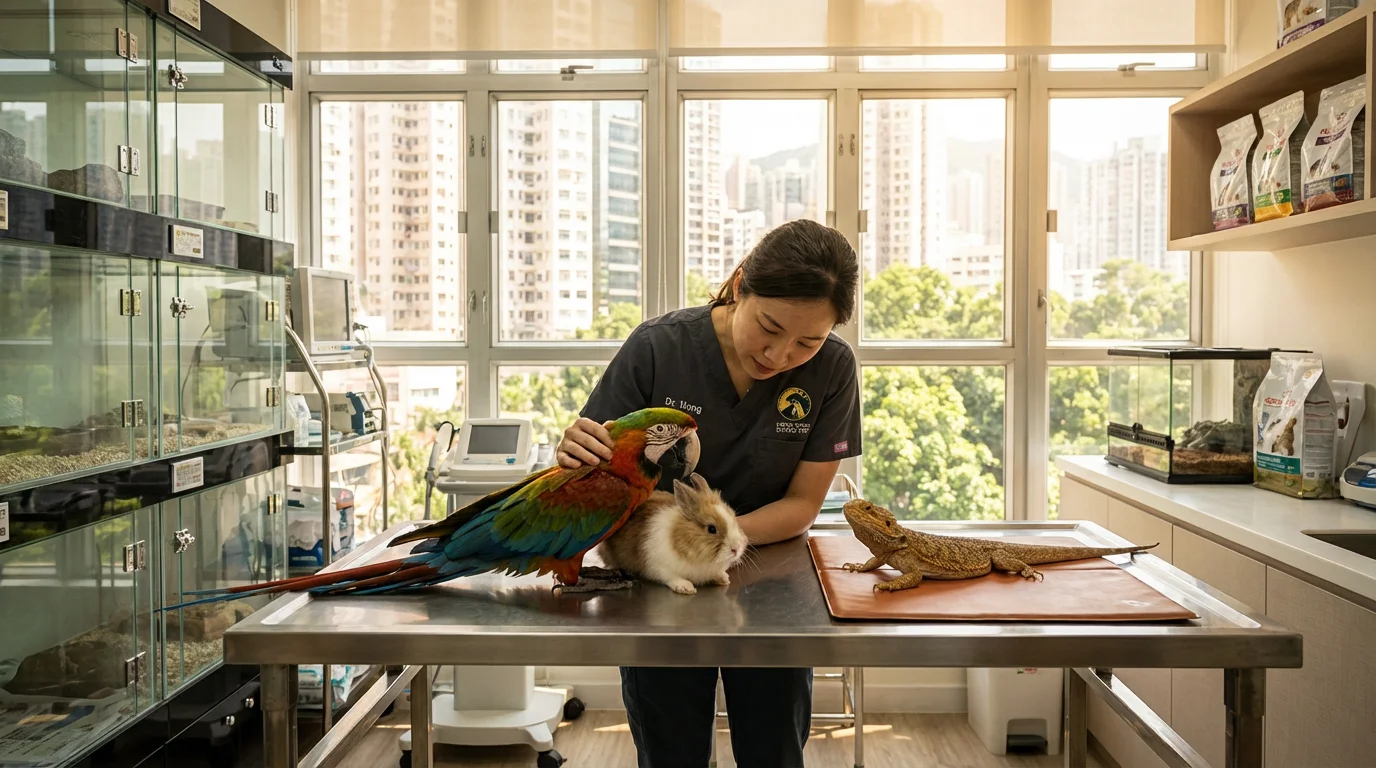
In Hong Kong's competitive veterinary market, having a well-optimized online presence is no longer optional—it's essential for practice growth and sustainability. With pet ownership rising and pet parents increasingly turning to online search to find veterinary services, search engine optimization (SEO) has become a critical component of veterinary practice marketing. This comprehensive guide provides Hong Kong veterinary clinics with actionable strategies to improve their local search visibility, attract more clients, and build a thriving practice in one of Asia's most dynamic pet markets.
Why SEO Matters for Hong Kong Vet Clinics
The digital landscape has fundamentally transformed how pet owners find and choose veterinary services. When a pet falls ill or requires routine care, the first instinct for most Hong Kong pet parents is to search online—often on their smartphones while on the go. Search queries like "emergency vet near me," "exotic pet vet Hong Kong," or "24-hour animal hospital Kowloon" represent high-intent searches from pet owners actively seeking veterinary services. If your clinic doesn't appear prominently in these search results, you're missing valuable opportunities to connect with potential clients at the exact moment they need your services.
Hong Kong's unique market characteristics make SEO particularly important for veterinary practices. The territory's high population density, multilingual environment, and tech-savvy residents create both opportunities and challenges. Pet owners in Hong Kong have high expectations for service quality and convenience, and they conduct thorough online research before choosing a veterinary provider. A strong SEO strategy ensures your clinic appears in front of these discerning pet parents, showcasing your expertise, services, and unique value proposition at the critical decision-making moment.
Building Your Local SEO Foundation
Local SEO is the cornerstone of veterinary practice marketing because pet owners overwhelmingly choose veterinary services based on geographic proximity and convenience. Unlike many other services that can be delivered remotely, veterinary care requires physical visits, making local search optimization absolutely critical. Your primary SEO objective should be appearing in the "Local Pack"—the map-based results that appear at the top of Google search results for location-based queries. These prominent positions capture the majority of clicks for local searches and represent the most valuable real estate in veterinary SEO.
The foundation of local SEO success begins with ensuring your clinic's NAP (Name, Address, Phone number) information is consistent across all online platforms. Inconsistent business information confuses search engines and can significantly harm your local search rankings. Audit all your online listings—Google Business Profile, Facebook, veterinary directories, review sites, and your website—to ensure your clinic name, address, and phone number are identical everywhere. Even minor variations like "Vet Clinic" versus "Veterinary Clinic" or different phone number formats can create problems. Establish a single, authoritative version of your NAP and use it consistently across all platforms.
Mastering Google Business Profile Optimization
Your Google Business Profile (formerly Google My Business) is arguably the single most important element of your veterinary SEO strategy. This free tool from Google allows you to manage how your clinic appears in Google Search and Google Maps, and it directly influences your visibility in local search results. The first step is claiming and verifying your listing at google.com/business if you haven't already done so. Once verified, you gain access to powerful features that can significantly boost your local visibility and attract more clients.
Category selection is one of the most critical decisions in your Google Business Profile setup. Your primary category should accurately reflect your main service offering—typically "Animal Hospital" for multi-veterinarian practices or "Veterinarian" for single-practitioner clinics. If you offer emergency services, consider adding "Emergency Veterinarian Service" as a secondary category. For exotic pet specialists, relevant categories might include "Veterinary Care" or specific exotic-focused options. Google allows up to 10 categories, but focus on the most relevant ones rather than adding categories just to appear in more searches. Irrelevant categories can actually harm your rankings by diluting your topical authority.
Complete every section of your Google Business Profile with detailed, accurate information. Add high-quality photos of your clinic exterior, reception area, examination rooms, and staff members. Visual content significantly impacts user engagement and conversion rates—listings with photos receive 42% more requests for directions and 35% more click-throughs to websites compared to listings without photos. Update your business hours accurately, including special hours for holidays, and clearly indicate if you offer 24-hour emergency services. Add your services list, highlighting specialized offerings like exotic pet care, dental services, or advanced diagnostics. The more complete and informative your profile, the more likely Google is to display it prominently in search results.
Leverage Google Posts to keep your profile fresh and engaging. Regular posts about clinic news, pet care tips, seasonal health reminders, or special promotions signal to Google that your business is active and engaged with customers. Posts appear directly in your Google Business Profile and can include photos, calls-to-action, and links to your website. Aim to publish at least one post per week to maintain an active presence. Additionally, enable messaging to allow potential clients to contact you directly through your Google Business Profile—this convenient feature can capture inquiries from pet owners who prefer messaging over phone calls.
Strategic Review Management
Online reviews have become one of the most powerful factors influencing both consumer decisions and local search rankings. Google's algorithm considers review quantity, review velocity (how frequently you receive new reviews), review diversity, and overall rating when determining local search rankings. Beyond their SEO impact, reviews serve as social proof that builds trust with potential clients. A veterinary clinic with dozens of recent, positive reviews will naturally attract more clients than a competitor with few or outdated reviews, even if both clinics offer similar services.
Developing a systematic approach to generating reviews is essential for SEO success. Train your front desk staff to request reviews from satisfied clients at optimal moments—typically right after a successful treatment or positive interaction. Make the review process as easy as possible by creating a short, memorable URL that links directly to your Google review page, or generate a QR code that clients can scan with their smartphones. Consider sending follow-up emails or text messages after appointments with a friendly review request and direct link. The key is making review submission effortless while the positive experience is fresh in the client's mind.
Responding to all reviews—both positive and negative—is crucial for both SEO and reputation management. When you respond to reviews, you signal to Google that you're an engaged, active business, which can positively impact rankings. More importantly, your responses demonstrate to potential clients that you value feedback and are committed to client satisfaction. For positive reviews, express genuine gratitude and personalize your response by mentioning specific details from their review. For negative reviews, respond promptly, professionally, and empathetically. Acknowledge the concern, apologize if appropriate, and offer to discuss the matter privately. Never argue or become defensive in public responses—potential clients are watching how you handle criticism, and a professional, caring response to a negative review can actually enhance your reputation.
Developing Your Keyword Strategy
Effective keyword research forms the foundation of your content strategy and on-page optimization efforts. For veterinary clinics, keyword strategy should focus heavily on location-based and service-specific terms that reflect how pet owners actually search for veterinary services. High-intent keywords—those indicating immediate need or strong purchase intent—should be your primary targets. Examples include "emergency vet [location]," "24-hour animal hospital [location]," or "[specific service] vet [location]." These searches come from pet owners actively seeking services right now, making them extremely valuable.
Hong Kong's bilingual environment requires a dual-language keyword strategy. Conduct separate keyword research for both English and Traditional Chinese (繁體中文), as search patterns and competition levels differ significantly between languages. English keywords might include "exotic pet vet Hong Kong" or "rabbit veterinarian Fortress Hill," while Chinese equivalents would be "香港異寵獸醫" or "炮台山兔子獸醫." Use tools like Google Keyword Planner, Ahrefs, or SEMrush to identify search volumes and competition levels for your target keywords in both languages.
Long-tail keywords—longer, more specific search phrases—often provide excellent opportunities for veterinary clinics. While they have lower search volumes than broad terms like "vet Hong Kong," they face less competition and attract more qualified traffic. Pet owners searching for "where to find exotic pet vet in Hong Kong that treats rabbits" have very specific needs and are likely to convert if your clinic matches their requirements. Create content targeting these long-tail keywords through blog posts, FAQ pages, and service pages that directly address specific pet owner concerns and questions.
Website Optimization Essentials
Your website serves as the central hub of your online presence and must be optimized for both search engines and user experience. Mobile optimization is absolutely critical—Google uses mobile-first indexing, meaning it primarily uses the mobile version of your site for ranking and indexing. With the majority of Hong Kong residents accessing the internet primarily through smartphones, a mobile-friendly website isn't optional. Ensure your site loads quickly on mobile devices, uses responsive design that adapts to different screen sizes, and features easily clickable buttons and phone numbers for convenient mobile interaction.
Page speed significantly impacts both SEO rankings and user experience. Pet owners searching for veterinary services, especially in emergency situations, won't wait for slow-loading pages. Use tools like Google PageSpeed Insights to identify speed issues and implement recommended improvements. Common optimizations include compressing images, minifying CSS and JavaScript, leveraging browser caching, and using a content delivery network (CDN). Aim for page load times under three seconds on mobile devices.
Structure your website with clear, logical navigation and dedicated pages for each major service you offer. Create separate pages for services like "Exotic Pet Care," "Dental Services," "Emergency Care," "Preventive Medicine," and "Diagnostic Services." Each service page should target relevant keywords, provide detailed information about the service, explain what pet owners can expect, and include clear calls-to-action (CTAs) like "Book an Appointment" or "Call Us Now." This structure helps search engines understand your service offerings and allows you to rank for service-specific searches.
Content Marketing for Veterinary SEO
Regular, high-quality content creation is one of the most effective long-term SEO strategies for veterinary clinics. A well-maintained blog serves multiple purposes: it helps you rank for informational keywords, establishes your expertise and authority, keeps your website fresh with regularly updated content, and provides valuable resources that pet owners appreciate and share. Content marketing also gives you material to share on social media and in email newsletters, extending your reach beyond search engines.
Focus your content on topics that address real pet owner questions and concerns. Pet care tips, common health issues, preventive care advice, seasonal health reminders, and emergency preparedness guides all make excellent blog topics. For exotic pet specialists, create comprehensive care guides for different species—proper rabbit nutrition, bird health signs to watch for, reptile habitat requirements, etc. Use your keyword research to identify topics pet owners are actively searching for, and create detailed, authoritative content that thoroughly answers their questions.
Content quality matters more than quantity. One comprehensive, well-researched article per month that thoroughly covers a topic will deliver better SEO results than multiple thin, superficial posts. Aim for content length of at least 1,000-1,500 words for substantive topics, include relevant images and videos, use clear headings and subheadings for readability, and write in an accessible style that pet owners can understand without veterinary training. Include clear calls-to-action in your content, encouraging readers to schedule appointments, call with questions, or sign up for your newsletter.
Bilingual SEO for Hong Kong Market
Hong Kong's bilingual environment presents unique SEO challenges and opportunities. To effectively reach the entire Hong Kong pet owner market, your veterinary clinic needs a comprehensive bilingual SEO strategy that serves both English and Traditional Chinese speakers. The most effective approach is creating separate, fully translated versions of your key pages rather than relying on automatic translation tools, which often produce awkward or inaccurate results that harm user experience and credibility.
Implement proper hreflang tags to tell search engines which language version to show to which users. These HTML tags indicate the language and geographic targeting of your pages, helping Google serve the appropriate version to users based on their language preferences and location. For example, your English homepage would include hreflang tags pointing to both the English and Chinese versions, and vice versa. This technical implementation prevents duplicate content issues while ensuring users see content in their preferred language.
Don't simply translate English content word-for-word into Chinese. Cultural adaptation is important—Chinese pet owners may have different concerns, preferences, and ways of expressing health-related queries compared to English speakers. Conduct separate keyword research for Chinese terms, as direct translations of English keywords may not reflect actual Chinese search behavior. Consider creating some Chinese-specific content that addresses cultural perspectives on pet care, traditional Chinese veterinary medicine integration, or topics particularly relevant to Chinese-speaking pet owners.
Building Local Citations and Backlinks
Local citations—mentions of your clinic's NAP information on other websites—play a significant role in local SEO rankings. Search engines use citations to verify your business information and assess your local relevance and authority. Start by ensuring your clinic is listed on major platforms like Google Business Profile, Facebook Business, Yelp, and industry-specific directories. For Hong Kong veterinary clinics, important directories include local Hong Kong business directories, pet-focused websites, and veterinary association listings.
Quality backlinks—links from other reputable websites to your clinic's website—remain one of the most important ranking factors in SEO. For veterinary clinics, focus on earning backlinks from relevant, authoritative sources rather than pursuing quantity. Local news coverage of your clinic, partnerships with pet-related businesses, veterinary association memberships, community involvement, and guest posts on pet care blogs all represent valuable backlink opportunities. When your clinic participates in community events, sponsors local pet activities, or contributes expertise to news stories, request that coverage includes a link to your website.
Avoid low-quality link-building tactics like purchasing links, participating in link exchanges, or submitting to irrelevant directories. These practices can result in Google penalties that severely harm your rankings. Focus instead on creating valuable content and building genuine relationships within the pet care community—quality backlinks will naturally follow as other sites reference your expertise and resources.
Tracking and Measuring SEO Success
Implementing SEO strategies without measuring results is like treating a patient without follow-up examinations—you need data to understand what's working and what needs adjustment. Set up comprehensive tracking using Google Analytics 4 and Google Search Console, both free tools that provide invaluable insights into your website's performance. Google Analytics shows you how much traffic your site receives, where visitors come from, which pages they visit, how long they stay, and whether they complete desired actions like calling your clinic or filling out appointment forms.
Google Search Console provides search-specific data, showing which keywords your site ranks for, how often your pages appear in search results, your click-through rates, and any technical issues affecting your search performance. Monitor your Google Business Profile Insights to see how many people view your profile, request directions, visit your website, or call your clinic directly from search results. This data helps you understand which aspects of your SEO strategy are driving real business results.
Track key performance indicators (KPIs) that align with your business goals. Important metrics for veterinary clinics include organic search traffic, local pack rankings for target keywords, phone calls from search, appointment bookings, Google Business Profile views and actions, review quantity and average rating, and ultimately, new client acquisition from organic search. Review these metrics monthly, identify trends and patterns, and adjust your strategy based on what the data reveals. SEO is an ongoing process, not a one-time project—continuous monitoring and optimization are essential for long-term success.
Building Long-Term SEO Success
SEO success for Hong Kong veterinary clinics doesn't happen overnight. Search engine optimization is a long-term investment that builds momentum over time as you consistently implement best practices, create valuable content, earn positive reviews, and build your online authority. The veterinary clinics that succeed with SEO are those that commit to ongoing optimization, stay current with evolving best practices, and maintain focus on providing genuine value to pet owners through their online presence.
Start with the fundamentals—claim and optimize your Google Business Profile, ensure NAP consistency, develop a review generation system, and make your website mobile-friendly. As these foundations solidify, expand into content marketing, bilingual optimization, and strategic link building. Remember that SEO works best as part of a comprehensive digital marketing strategy that includes social media, email marketing, and excellent client service that naturally generates positive word-of-mouth and online reviews. By following the strategies outlined in this guide and maintaining consistent effort over time, your Hong Kong veterinary clinic can achieve strong local search visibility, attract more qualified clients, and build a thriving practice in one of Asia's most competitive pet care markets.