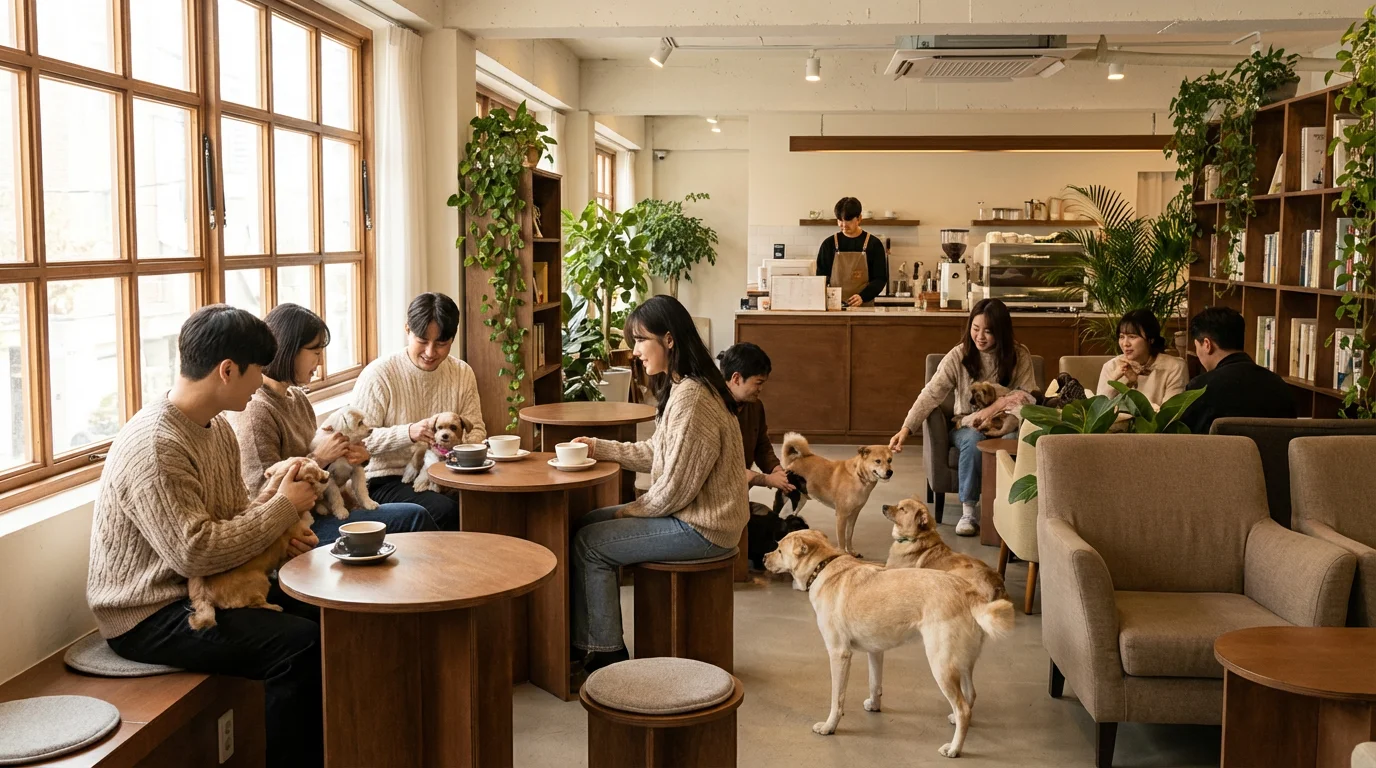
A innovative blend of cafe culture and animal welfare is transforming pet adoption in South Korea, creating welcoming spaces where rescue animals find homes and communities build connections.
資料來源:本文基於公開新聞報導和產業資訊整理。數據來自官方新聞稿、媒體報導及行業公告(2025年)。
In neighborhoods across Seoul, Busan, and other South Korean cities, a new type of establishment is gaining popularity: the pet adoption cafe. These hybrid spaces combine traditional cafe amenities—quality coffee, comfortable seating, WiFi—with the opportunity to interact with rescue animals available for adoption. The model is proving remarkably effective at addressing animal welfare challenges while meeting social needs.
A New Approach to Animal Welfare
Traditional animal shelters, while serving an essential function, can be intimidating environments for potential adopters. Sterile facilities, stressed animals in cages, and time-pressured decision-making create barriers to adoption. Pet adoption cafes flip this model, creating relaxed environments where people can spend time with animals without pressure or commitment.
The cafes typically house a rotating selection of rescue dogs and cats, all available for adoption. Animals roam freely or rest in comfortable spaces, displaying their natural personalities rather than shelter-induced stress behaviors. Visitors pay an entrance fee or purchase food and beverages, with proceeds supporting the rescue operation and animal care costs.
Building Community Connections
Beyond facilitating adoptions, these cafes serve as community hubs. Regular visitors develop relationships with staff and other patrons, creating networks of pet lovers who share advice, resources, and support. For people unable to keep pets due to housing restrictions or lifestyle constraints, the cafes provide opportunities for animal interaction and companionship.
Some cafes host educational events, teaching responsible pet ownership, basic training techniques, and animal welfare principles. Others organize volunteer programs, allowing supporters to contribute time and skills to animal care. This community engagement creates a sustainable support system extending beyond individual adoptions.
The Adoption Process
Pet adoption cafes maintain rigorous screening processes to ensure good matches between animals and adopters. Prospective adopters typically visit multiple times, interacting with different animals and learning about their personalities, needs, and histories. Staff provide guidance, answering questions and offering realistic assessments of what pet ownership entails.
This extended interaction period benefits both animals and adopters. Animals have opportunities to demonstrate their true personalities in a home-like environment, while adopters can make informed decisions based on actual experience rather than brief shelter visits. The result is lower return rates and more successful long-term placements.
Business Model and Sustainability
Operating a pet adoption cafe requires balancing animal welfare priorities with business sustainability. Successful cafes generate revenue through entrance fees, food and beverage sales, and retail products like pet supplies and merchandise. Some supplement income through donations, sponsorships, and partnerships with pet brands seeking authentic community engagement opportunities.
The model's economic viability has attracted entrepreneurs who see opportunities to do well while doing good. However, maintaining high standards for both customer experience and animal welfare requires significant investment in staff training, facility maintenance, and veterinary care. The most successful operations treat animal welfare as non-negotiable while finding creative ways to optimize other aspects of the business.
Cultural Context and Growth
Pet adoption cafes align well with several aspects of South Korean culture. The country's vibrant cafe culture provides a familiar framework, while growing awareness of animal welfare issues creates receptive audiences. Younger generations, in particular, demonstrate strong interest in ethical consumption and social responsibility, making them natural supporters of the adoption cafe model.
The COVID-19 pandemic accelerated interest in pet ownership across South Korea, as people sought companionship during lockdowns and social distancing. However, this surge also led to increased pet abandonments as some owners found themselves unable to manage the responsibilities. Adoption cafes have played a crucial role in rehoming these animals and educating the public about responsible ownership.
Challenges and Criticisms
Despite their benefits, pet adoption cafes face criticisms and challenges. Animal welfare advocates express concerns about stress on animals from constant human interaction, particularly for shy or traumatized rescues. Ensuring adequate rest periods, monitoring animal wellbeing, and maintaining appropriate group dynamics requires constant vigilance and professional expertise.
Some critics question whether the cafe environment might encourage impulsive adoptions, though operators counter that their extended interaction model actually reduces impulse decisions compared to traditional shelters. Regulatory frameworks are still evolving, with authorities working to establish standards that protect animal welfare while allowing the model to flourish.
Regional Expansion and Adaptation
The pet adoption cafe model is spreading beyond South Korea to other Asian markets. Japan, Taiwan, and Thailand have seen similar establishments emerge, each adapting the concept to local contexts and regulations. The model's success suggests potential for further international expansion, particularly in urban markets with strong cafe cultures and growing pet ownership rates.
As the concept matures, operators are experimenting with variations. Some cafes specialize in specific animal types or breeds, while others focus on senior pets or animals with special needs. These specialized approaches help address gaps in traditional rescue systems and demonstrate the model's flexibility.
Key Takeaways
- Pet adoption cafes combine social spaces with animal rescue operations
- Relaxed environment allows extended interaction, improving adoption success rates
- Cafes serve as community hubs, building networks of pet lovers and supporters
- Business model balances commercial viability with animal welfare priorities
- Model aligns with South Korean cafe culture and growing animal welfare awareness
- Concept spreading to other Asian markets with local adaptations
Note: This article is based on observations of the pet adoption cafe trend in South Korea and analysis of similar social innovation models in animal welfare. Individual cafe practices and outcomes may vary.
Related Articles
Exploring Innovative Pet Business Models?
Our team provides strategic analysis of emerging pet care trends, consumer behavior, and business model innovation across Asia-Pacific markets.
資料說明
本文內容整合自韓國動物保護組織、領養咖啡館官方資訊及韓國媒體報導
References
- The Korea Times. "How a small cafe is transforming Korea's pet adoption culture." August 20, 2025.The Korea Times
- Wheree. "Kara adoption Cafe - Seoul." 2025.Wheree
- Gangdong District. "Professional cafe for adoption of abandoned dogs." August 24, 2025.Gangdong District
- Adopt Korean Rescue. "About AKR." 2025.Adopt Korean Rescue
Related Articles

Korea Petnow Biometric ID Expands to North America
Nose print recognition technology expands to North America with US government partnerships

Korean AI System Wins Innovation Award for Pet Health Diagnostics
AI system trained on 2.5 million images wins innovation award for pet health diagnostics